
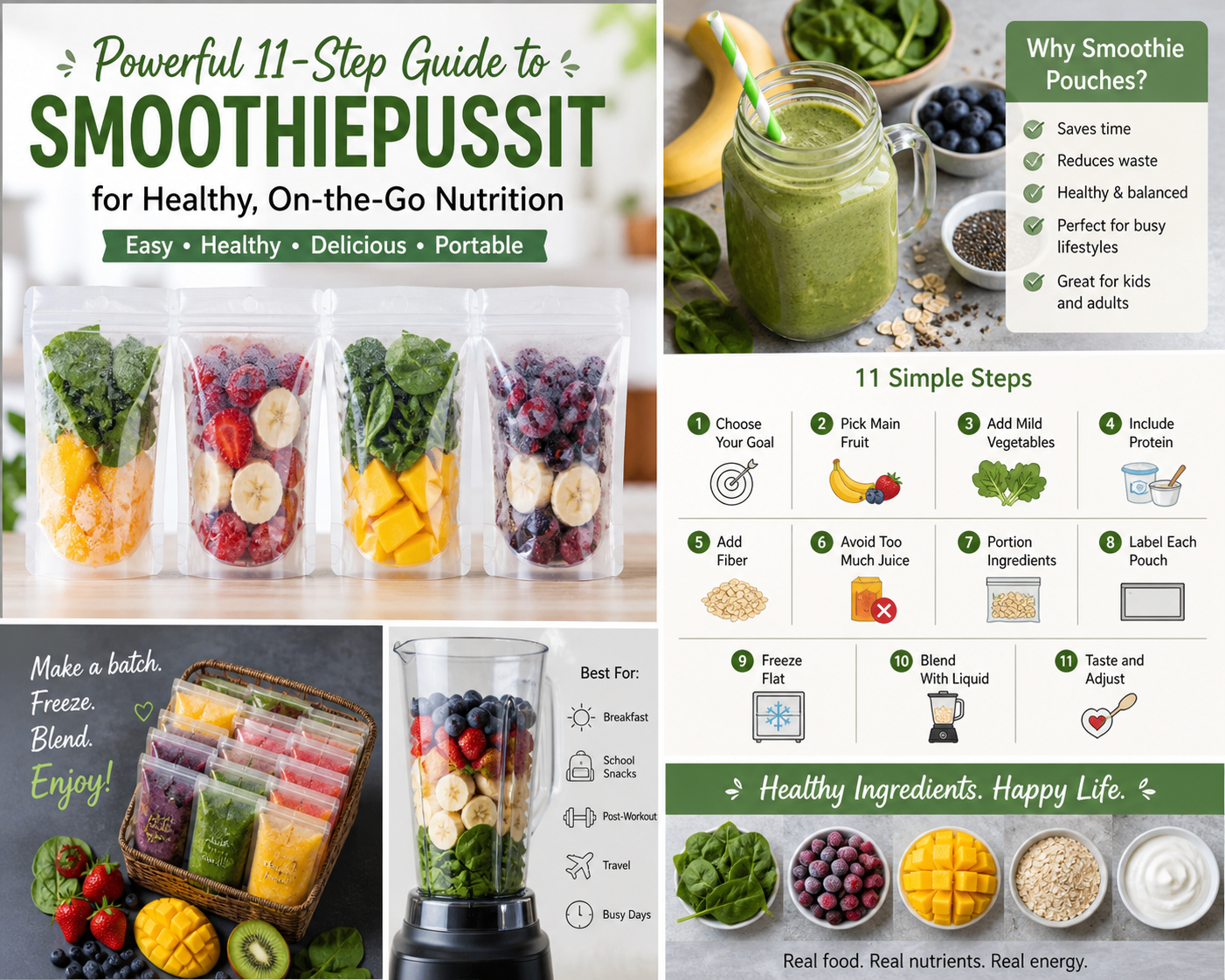
What Are Smoothie Pouches?
Smoothie pouches are pre-portioned packs filled with fruit, vegetables, and other smoothie-ready ingredients. Some are stored in the freezer and blended later, while others are squeezable, ready-to-eat pouches. The idea is simple: make healthy choices easier when life gets busy.
The term “pussi” is commonly translated from Finnish as “bag” or “pouch,” which explains why the keyword is often linked online with smoothie bags or portable smoothie packs.
In practical terms, smoothie pouches help people prepare a quick breakfast, school snack, post-workout drink, or travel-friendly option without starting from scratch every time. They can also reduce food waste because fruit that is close to ripening can be chopped, packed, and frozen before it spoils.
Why Portable Smoothies Are So Popular
Modern routines are packed. Many people skip breakfast, grab sugary snacks, or rely on fast food because they feel short on time. Smoothie pouches offer a middle path. They are quick, flexible, and easy to customize.
A good smoothie pouch can include:
| Ingredient Type | Examples | Main Benefit |
|---|---|---|
| Fruits | Banana, berries, mango, apple | Natural sweetness and vitamins |
| Vegetables | Spinach, carrot, cucumber | More nutrients without strong flavor |
| Protein | Greek yogurt, milk, tofu | Helps make the drink more filling |
| Fiber | Oats, chia seeds, flaxseed | Supports fullness and digestion |
| Healthy fats | Avocado, nut butter | Adds creaminess and steady energy |
Fruits and vegetables provide vitamins, minerals, fiber, and other substances that support good health, according to the CDC. That’s why a smoothie pouch works best when it uses whole foods instead of mostly juice, syrup, or sweetened yogurt.
Smoothiepussit Benefits for Busy Homes
The biggest benefit is convenience. You can prepare several pouches in one session, store them, and blend them when needed. This saves time during rushed mornings and helps families make better choices.
Another benefit is portion control. Instead of guessing how much fruit, yogurt, or oats to use, you can measure ingredients in advance. This keeps flavor and nutrition more consistent.
Smoothie pouches are also helpful for children who avoid vegetables. Mild greens like spinach blend well with banana, mango, or berries. The taste stays sweet and smooth, while the nutrition improves.
For adults, smoothie pouches can support workdays, travel, fitness routines, and light meals. However, balance matters. A smoothie made only with fruit juice and sweet fruit may taste good, but it can be high in sugar and less filling. Whole fruit, protein, and fiber-rich add-ins are better choices.
11 Steps to Make Healthy Smoothie Pouches
1. Choose a Clear Goal
Start by deciding what the pouch is for. A breakfast smoothie may need oats and yogurt. A post-workout smoothie may need protein. A light snack may need only fruit, greens, and water.
2. Pick One Main Fruit
Use one strong fruit as the flavor base. Banana adds creaminess. Mango adds tropical sweetness. Berries add color and a fresh taste.
3. Add One Mild Vegetable
Spinach, cucumber, zucchini, carrot, and avocado are good choices. They blend smoothly and do not overpower the drink.
4. Include Protein
Protein helps the smoothie feel more complete. Good options include Greek yogurt, milk, soy milk, kefir, tofu, or a simple protein powder.
5. Add Fiber
Fiber helps support digestive health and can help people feel fuller longer. The CDC notes that fiber supports digestion, fullness, blood sugar control, and cholesterol levels. Try oats, chia seeds, flaxseed, or whole fruit.
6. Avoid Too Much Juice
Juice can make smoothies very sweet. Use water, milk, or unsweetened plant milk instead. Add a small splash of juice only when needed for flavor.
7. Portion the Ingredients
Place each serving into a freezer-safe pouch or container. A simple serving could include:
- 1 cup fruit
- ½ cup vegetables
- ½ cup yogurt or protein source
- 1 tablespoon seeds or oats
8. Label Each Pouch
Write the flavor and date on each pouch. This makes your freezer easier to manage.
9. Freeze Flat
Lay pouches flat so they freeze quickly and stack neatly.
10. Blend With Liquid
When ready, pour the frozen ingredients into a blender and add liquid. Start with less liquid, then add more until the texture is right.
11. Taste and Adjust
Add cinnamon, cocoa, lemon juice, mint, or ginger for extra flavor. Avoid turning every smoothie into a dessert by adding too much honey, syrup, or sweetened yogurt.
Best Flavor Ideas
| Flavor Name | Ingredients | Best For |
|---|---|---|
| Berry Breakfast | Blueberries, banana, spinach, oats, yogurt | Morning energy |
| Tropical Green | Mango, pineapple, spinach, coconut water | Refreshing snack |
| Creamy Banana Oat | Banana, oats, milk, cinnamon, flaxseed | Filling breakfast |
| Peach Carrot Glow | Peach, carrot, yogurt, ginger | Mild vegetable blend |
| Chocolate Avocado | Banana, avocado, cocoa, milk | Dessert-style smoothie |
Common Mistakes to Avoid
The first mistake is adding too many sweet ingredients. Fruit, juice, sweetened yogurt, honey, and flavored milk can quickly make the smoothie sugar-heavy.
The second mistake is forgetting protein. Without protein, the smoothie may not keep you full for long.
The third mistake is poor storage. Use clean, freezer-safe pouches or containers. Remove extra air before sealing to protect texture and flavor.
The fourth mistake is using only the same ingredients every day. Variety helps you enjoy different nutrients and prevents boredom.
FAQs About Smoothie Pouches
1. Are smoothie pouches healthy?
Yes, they can be healthy when made with whole fruits, vegetables, protein, and fiber. They become less healthy when loaded with juice, syrup, sweetened yogurt, or ice cream.
2. Can I make them without a freezer?
Yes. You can prepare fresh smoothie packs in the refrigerator for short-term use. For longer storage, freezing is better.
3. How long do freezer smoothie pouches last?
For best quality, use them within about one to three months. Always check smell, texture, and freezer condition before blending.
4. What liquid should I use?
Water, milk, unsweetened plant milk, kefir, or coconut water can work. The best choice depends on your taste and nutrition goal.
5. Can kids use smoothie pouches?
Yes, but keep portions age-appropriate. Avoid too much added sugar, and choose simple ingredients.
6. Can smoothie pouches replace meals?
Sometimes, but only if they are balanced. A meal-style smoothie should include protein, fiber, healthy fats, and enough calories to satisfy you.
Conclusion
Smoothiepussit can be a smart, simple way to enjoy healthy smoothies without daily prep stress. With the right mix of fruit, vegetables, protein, fiber, and liquid, these pouches can support busy mornings, school lunches, travel days, and fitness routines.
The key is balance. Use whole foods, limit added sugar, rotate ingredients, and prepare pouches in batches. That way, every blend is quick, tasty, and nourishing.
