
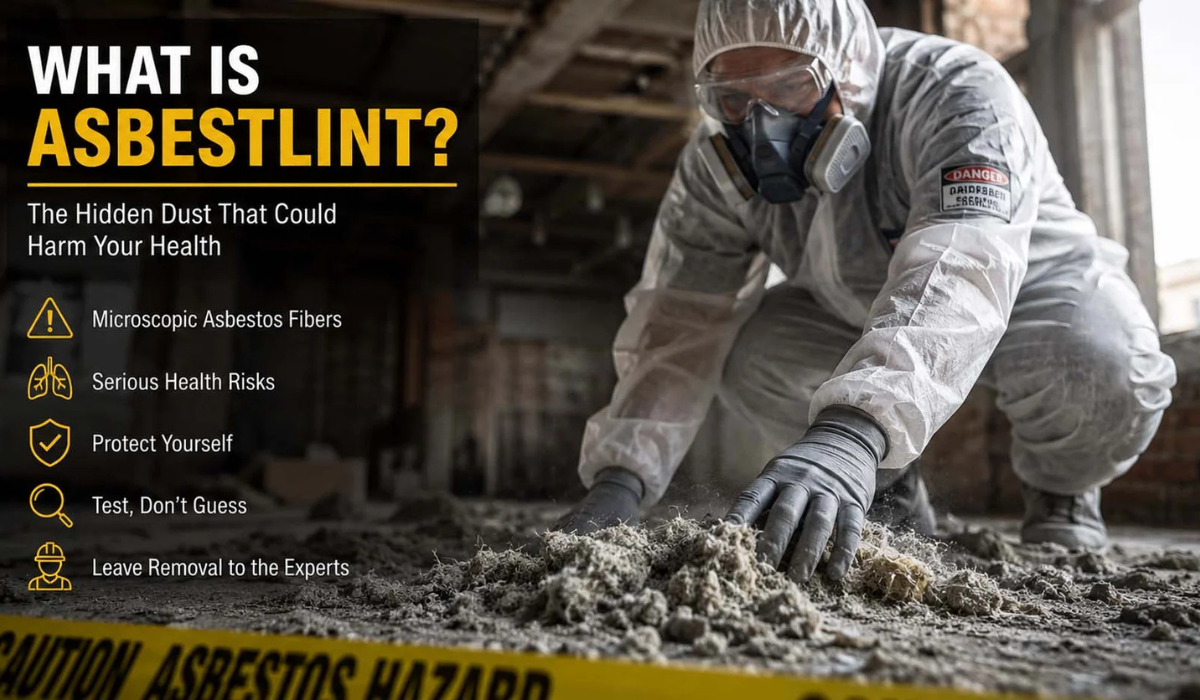
Asbestlint has been used in various industrial and technical applications due to its heat-resistant and insulating properties Understanding its composition, history, and modern alternatives helps businesses and consumers make informed decisions This guide explores every important aspect of Asbestlint, from its origins to current industry practices.
Quick Bio
| Feature | Details |
|---|---|
| Name | Asbestlint |
| Definition | A lint-like material associated with asbestos fibers used for insulation and industrial purposes |
| Origin | Developed during the widespread industrial use of asbestos materials |
| Primary Use | Heat insulation, fire resistance, and industrial protection |
| Industry | Construction, manufacturing, shipbuilding, and industrial maintenance |
| Common Materials | Asbestos fibers, mineral-based compounds, woven insulation materials |
| Key Property | High resistance to heat and fire |
| Popular Applications | Pipe insulation, industrial equipment protection, thermal barriers |
| Safety Status | Regulated or restricted in many countries due to health concerns |
| Modern Alternatives | Fiberglass, ceramic fiber, mineral wool, and synthetic insulation |
What Is Asbestlint?
Something called asbestlint is a stringy kind of cover-up stuff once made using asbestos bits. Its big moment came when people noticed how well it handled blistering heat.
Fireproofing needs made this substance a frequent choice in settings requiring heat protection. Throughout the 1900s, various manufacturing fields depended heavily on its insulating properties.
Historical Origins of Asbestlint
The history of Asbestlint is closely tied to the broader development of asbestos products. During rapid industrial expansion, manufacturers searched for materials capable of handling high heat and harsh operating conditions.
Asbestos fibers offered a practical solution, leading to the creation of numerous insulation products, including lint-like materials used around machinery and piping systems.
Why Asbestlint Became Popular
Several factors contributed to the widespread adoption of Asbestlint:
- Excellent thermal insulation
- High fire resistance
- Durability under stress
- Chemical resistance
- Relatively low production cost
These characteristics made it attractive for factories, ships, power plants, and commercial buildings.
Materials Used in Asbestlint
Natural Asbestos Fibers
Traditional Asbestlint primarily contained naturally occurring asbestos minerals. These fibers could be separated into fine strands and incorporated into insulation products.
Supporting Compounds
Manufacturers often combined asbestos fibers with:
- Binding agents
- Mineral fillers
- Protective coatings
- Reinforcement materials
The combination improved performance and extended product lifespan.
Main Industrial Applications
Thermal Insulation
One of the most common uses of Asbestlint was preventing heat loss from industrial systems. It helped maintain operational efficiency while reducing energy consumption.
Equipment Protection
Heavy machinery operating at high temperatures frequently incorporated insulation materials containing asbestos-based components.
Fire Protection Systems
Many facilities used these materials to create protective barriers against heat and flames.
Construction Industry Uses
The construction sector once relied heavily on Asbestlint and related products.
Common applications included:
- Pipe wrapping
- Boiler insulation
- Roof insulation
- Wall cavity protection
- Mechanical room insulation
Many older buildings still contain asbestos-based materials installed decades ago.
Role in Shipbuilding and Marine Engineering
Shipbuilders valued Asbestlint because vessels required extensive fire protection. Engine rooms, boiler systems, and exhaust structures often contained asbestos insulation.
The material helped improve safety standards aboard commercial and military ships during much of the twentieth century.
Heat Resistance Properties
Temperature Performance
A major advantage of Asbestlint was its ability to tolerate extremely high temperatures without significant degradation.
Thermal Stability
The material maintained structural integrity under demanding industrial conditions, making it suitable for long-term use.
These properties explain why asbestos-based insulation remained common for many years.
Health and Safety Concerns
Later findings showed clear dangers tied to breathing in asbestos fibers.
Out of crumbling insulation, tiny threads escape into the breeze. Breathing them in may lead to serious lung problems over time.
With such dangers in mind, strict rules on managing, taking out, or getting rid of asbestos became common across numerous countries. Government actions followed close behind rising concerns.
Regulatory Changes Around the World
Numerous countries have restricted or banned asbestos-containing products.
Regulatory agencies now require:
- Specialized inspections
- Controlled removal procedures
- Certified disposal methods
- Workplace exposure monitoring
Organizations dealing with older buildings often conduct asbestos surveys before renovation projects begin.
Identifying Asbestlint in Older Structures
Visual Assessment
It can be difficult to identify Asbestlint through appearance alone because many insulation products look similar.
Laboratory Testing
Professional testing remains the most reliable method. Samples are analyzed under controlled laboratory conditions to determine whether asbestos fibers are present.
Property owners should avoid disturbing suspicious materials without expert guidance.
Modern Alternatives to Asbestlint
The decline of asbestos use encouraged the development of safer insulation materials.
Popular replacements include:
- Fiberglass insulation
- Mineral wool
- Ceramic fiber products
- Calcium silicate insulation
- Advanced synthetic thermal barriers
These alternatives provide strong performance without many of the risks associated with asbestos.
Commercial Variations and Replacement Products
Modern manufacturers produce specialized insulation solutions tailored to different industries.
Examples include:
High-Temperature Fiberglass
Widely used in manufacturing facilities and commercial buildings.
Mineral Wool Systems
Known for excellent fire resistance and sound absorption.
Ceramic Fiber Insulation
Suitable for furnaces, kilns, and extreme-temperature environments.
Each option offers distinct benefits depending on operational requirements.
Future Trends in Industrial Insulation
The insulation industry continues evolving toward safer and more efficient materials.
Emerging trends include:
- Eco-friendly insulation products
- Recyclable thermal materials
- Lightweight industrial barriers
- Smart insulation technologies
- Enhanced energy-efficiency systems
These innovations aim to improve performance while reducing environmental impact.
Economic Impact of Asbestos Replacement
Replacing asbestos-containing materials has become a significant industry worldwide.
Building owners often invest in:
- Hazard assessments
- Material testing
- Professional removal
- Facility upgrades
- Long-term compliance programs
Although replacement costs can be substantial, safer environments typically provide long-term benefits.
Conclusion
Asbestlint played an important role in industrial development because of its impressive heat-resistant and insulating characteristics. However, growing awareness of asbestos-related health risks led to stricter regulations and a shift toward safer alternatives. Today, industries rely on advanced insulation materials such as fiberglass, mineral wool, and ceramic fiber to achieve similar performance while prioritizing worker safety and environmental responsibility. Understanding the history, applications, and modern replacements for Asbestlint helps property owners, engineers, and businesses make informed decisions when managing older structures or selecting insulation systems.
FAQs
1. What is Asbestlint primarily used for?
Asbestlint was mainly used for thermal insulation, fire protection, and equipment shielding in industrial and construction environments where high temperatures were common.
2. Is Asbestlint dangerous to human health?
If the material contains asbestos and fibers become airborne, exposure may pose serious health risks. Proper inspection and professional handling are recommended.
3. How can I identify Asbestlint in an old building?
Visual inspection alone is unreliable. Certified laboratory testing is the safest and most accurate method for identifying asbestos-containing materials.
4. What materials have replaced Asbestlint in modern industries?
Common replacements include fiberglass, mineral wool, ceramic fiber, calcium silicate insulation, and other engineered thermal barrier products.
5. Can Asbestlint still be legally used today?
Regulations vary by country. Many regions have banned or heavily restricted asbestos-containing products, while others permit limited controlled use under strict regulations.
