
hawaiian telcom In a world where digital threads are woven into every aspect of our lives, the concept of connection takes on a unique meaning in the middle of the Pacific Ocean. For the people of Hawaiʻi, staying connected is not merely a matter of convenience. It is a vital lifeline that spans thousands of miles of deep blue water to reach the rest of the globe. At the heart of this intricate web is Hawaiian Telcom, a company that has evolved from a nineteenth-century royal charter into a modern-day pioneer of fiber optic technology.
The story of Hawaiian Telcom is more than just a corporate history. It is a narrative of resilience, innovation, and a deep-seated commitment to the spirit of Aloha. As we look toward the final months of 2026, the company finds itself on the cusp of a historic milestone: making Hawaiʻi the first fully fiber-enabled state in the entire United States. This journey from copper wires to light-speed pulses reflects the changing face of the islands themselves.
A Royal Foundation: The Roots of Communication
To understand where Hawaiian Telcom is going, one must first look at where it began. The company’s origins are surprisingly regal. Founded in 1883 as the Mutual Telephone Company, it was chartered under the Kingdom of Hawaiʻi during the reign of King Kalākaua. The “Merrie Monarch” was famously a fan of modern technology. He met Thomas Edison and was an early adopter of electricity and telecommunications, ensuring that Honolulu had a functioning telephone system and electric lights before even the White House or many European palaces did.
In those early days, communication was a tool of the monarchy and the growing merchant class. The company survived the transition from a kingdom to a republic, then to a territory, and eventually to the fiftieth state. Over the decades, it changed hands and names, becoming GTE Hawaiian Tel and later Verizon Hawaii. However, there was often a sense among locals that these large, mainland-based conglomerates did not quite “get” the specific needs of an island community.
The turning point came in the early 2000s when the company was purchased by The Carlyle Group and rebranded as Hawaiian Telcom. This era was marked by significant growing pains, including a highly publicized bankruptcy and a struggle to modernize aging systems. Yet, these challenges paved the way for a rebirth. The company transitioned into a publicly traded entity and eventually found a strategic partner in altafiber, formerly known as Cincinnati Bell. This partnership provided the capital and technical expertise needed to launch a massive infrastructure overhaul that continues to this day.
The Fiber Revolution: Fioptics and the 2026 Vision
For many years, internet access in rural parts of the islands was a frustrating experience. Copper lines that were perfectly adequate for voice calls struggled to handle the high-bandwidth demands of the modern internet. Hawaiian Telcom recognized that the only way to future-proof the islands was to move away from copper entirely.
Enter Fioptics, the company’s flagship fiber-to-the-premise (FTTP) service. Unlike hybrid systems that use fiber for the main lines but switch back to copper for the “last mile” into your home, Fioptics delivers a dedicated fiber line directly to the router. This distinction is crucial. Fiber optics use pulses of light rather than electrical signals, which means they are immune to the electromagnetic interference that often plagues copper wires in Hawaiʻi’s salt-heavy, humid environment.
The current goal is ambitious. Under the leadership of President Su Shin, the company is investing approximately $1.7 billion to ensure that every home and business in the state has access to high-speed fiber. By the end of 2026, this vision is expected to become a reality. This is not just about faster Netflix streaming or lag-free gaming. It is about economic diversification.
Why Fiber Matters for Island Life
The geography of Hawaiʻi presents unique challenges for infrastructure. You have volcanic terrain, dense rainforests, and communities separated by massive stretches of ocean. Fiber is uniquely suited for this environment because:
Reliability: It is less susceptible to weather-related outages compared to traditional cable or DSL.
-
Symmetry: Unlike cable internet, which often offers fast downloads but sluggish uploads, fiber provides symmetrical speeds. This is essential for video conferencing and uploading large files to the cloud.
Scalability: The physical glass strands can handle vastly higher data loads as technology improves. By installing the fiber now, the company is essentially building a highway that can accommodate future “cars” that haven’t even been invented yet.
Bridging the Ocean: The Infrastructure of the Pacific
When you click a link in Honolulu, that data doesn’t just float through the air. It travels through thousands of miles of undersea cables resting on the ocean floor. Hawaiian Telcom is a major player in this “submarine” infrastructure. The company has invested heavily in projects like the South East Asia-United States (SEA-US) cable system, which links Manado in Indonesia, Davao in the Philippines, Piti in Guam, Honolulu in Hawaiʻi, and Los Angeles in California.
In 2026, these subsea links are more important than ever. Google’s Pacific Connect initiative, featuring cables like Taihei and Tabua, is further cementing Hawaiʻi’s role as a central hub for trans-Pacific data traffic. Hawaiian Telcom serves as a local partner for these massive international projects, providing the landing stations and the domestic backhaul that connects these global “pipes” to local neighborhoods.
Additionally, the company is working on the Hawaiian Islands Fiber Link (HIFL) in partnership with the University of Hawaiʻi. This project is designed to replace aging inter-island cables that are nearing the end of their design life. By refreshing the links between Oʻahu, Maui, Kauaʻi, and the Big Island, the state ensures that a disaster on one island won’t sever the connection for the others.
Business Beyond Borders: Managed Services and Security
For the local business community, Hawaiian Telcom has shifted from being a “phone company” to becoming a full-scale IT partner. The modern Hawaiian business landscape is increasingly digital, whether it is a small boutique in Kakaʻako or a large resort on the Kohala Coast.
The company’s suite of business solutions includes:
-
Managed Security: With the rise of global cyber threats, many local businesses lack the resources to maintain a dedicated security team. Hawaiian Telcom offers 24/7 monitoring through its Security Operations Center (SOC), providing a shield against ransomware and data breaches.
Cloud Connectivity: Direct links to major cloud providers like AWS and Azure ensure that businesses can run their operations smoothly without the latency issues that often come with traditional internet connections.
This shift toward managed services is particularly important for the tourism industry. Modern travelers expect seamless, high-speed Wi-Fi from the moment they check in. By providing the underlying infrastructure for these resorts, Hawaiian Telcom plays an invisible but vital role in the state’s primary economic engine.
Community and Digital Equity: The Connect Kākou Initiative
Hawaiian Telcom is a key participant in the state’s Connect Kākou initiative, a multi-agency effort to ensure digital equity. This involves more than just laying cables. It includes offering affordable internet programs for low-income households and participating in digital literacy programs. The company recognizes that a high-speed connection is only useful if people know how to use it and can afford to keep it.
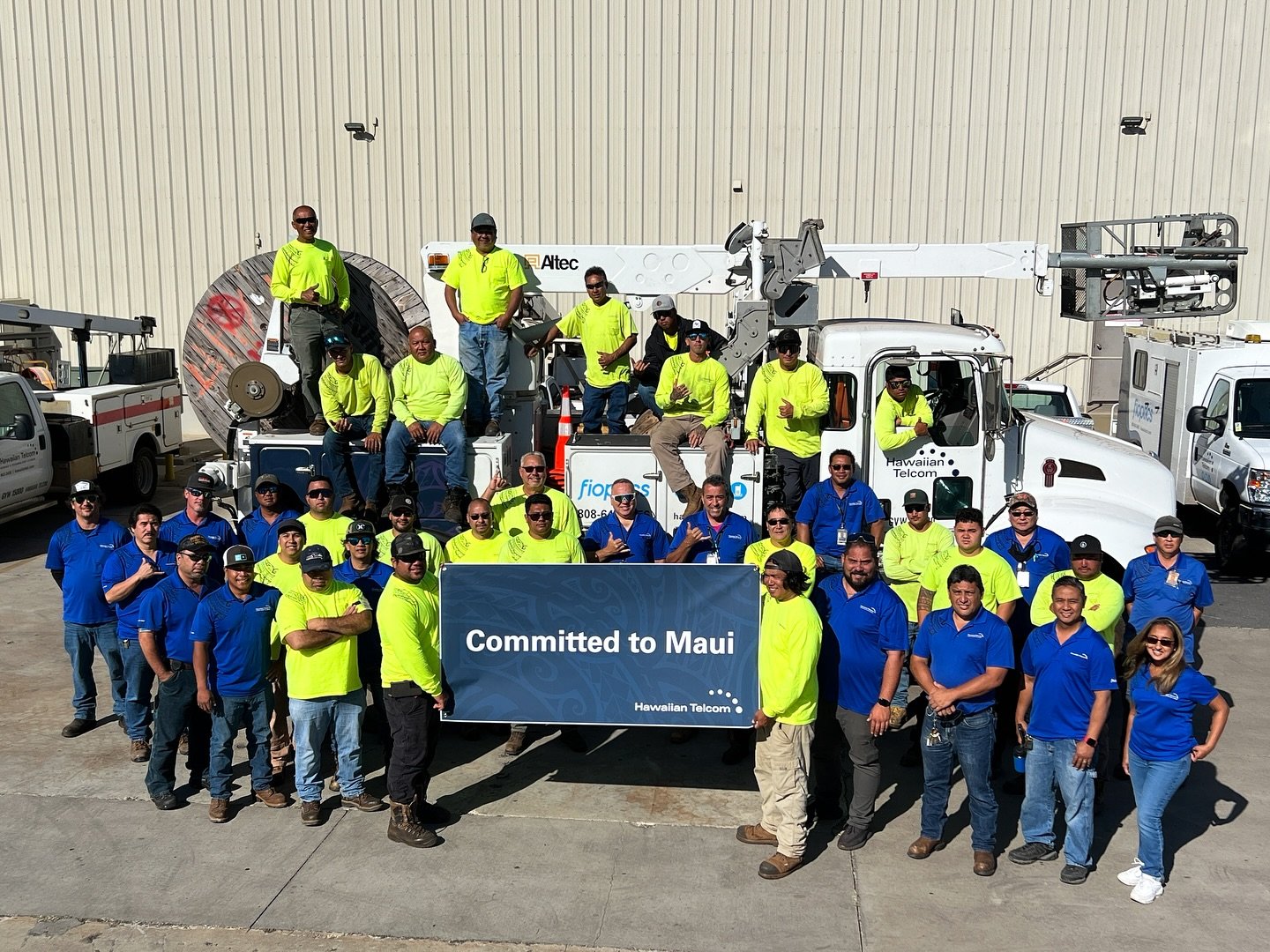
During the devastating wildfires on Maui in 2023, the importance of a local, dedicated communications provider became clear.
Navigating the Competitive Landscape
Of course, Hawaiian Telcom does not operate in a vacuum. It faces stiff competition from mainland giants like Spectrum (Charter Communications) and mobile carriers like T-Mobile and AT&T who offer 5G home internet.
The company’s strategy for winning this battle is two-fold: technology and localism. While 5G is a great tool, it cannot match the raw speed and stability of a dedicated fiber line.
On the local front, the company emphasizes its deep roots.
The Future Under the Sun
As we look toward the 2030s, the role of Hawaiian Telcom will likely continue to expand. In a state as environmentally conscious as Hawaiʻi, these innovations could be game-changers for sustainability.
The company is also exploring how its network can support the next generation of healthcare through telehealth. For residents on the neighbor islands who might have to fly to Oʻahu to see a specialist, a high-quality video link could save time, money, and even lives.
The journey of Hawaiian Telcom is a testament to the power of evolution. It has survived the fall of a kingdom, the rise of the digital age, and the complexities of global finance.
The company’s mission to connect the islands to the world is not just a business goal. It is a promise to keep the spirit of communication alive in the heart of the Pacific.
In the end, the success of Hawaiian Telcom will not be measured just by gigabits or stock prices. It will be measured by the opportunities it creates for the people of Hawaiʻi. By building a world-class digital infrastructure, the company is ensuring that no matter how isolated the islands may be geographically, they will always be at the center of the global conversation. The future of the islands is bright, and it is traveling at the speed of light.
