
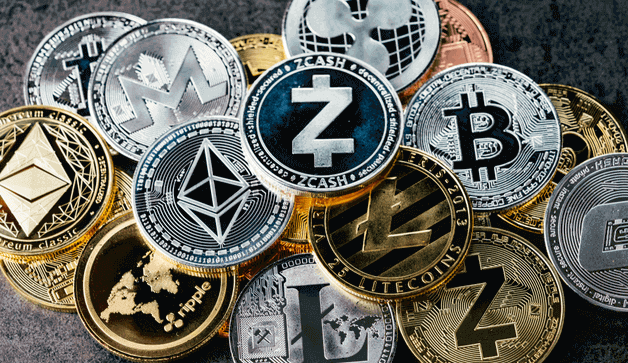
Alt coins The world of digital finance has traveled a long way since the early days of Bitcoin. While the original cryptocurrency remains a cornerstone of the industry, acting much like digital gold, the real movement and variety now live within the vast universe of altcoins. In 2026, the term “altcoin” refers to any cryptocurrency that is not Bitcoin, but the definition has evolved to represent something much deeper. These assets are no longer just “alternatives” to Bitcoin; they are the specialized tools, platforms, and foundations upon which the modern decentralized economy is built.
Navigating this space requires a blend of curiosity and caution. Whether you are interested in the efficiency of smart contracts or the cultural phenomenon of community-driven tokens, understanding altcoins is essential for anyone looking to grasp the future of money. In this guide, we will explore the nuances of the altcoin market, the technology behind them, and how they have reshaped our financial reality.
Defining the Altcoin Ecosystem
In the early 2010s, an altcoin was often just a slight variation of Bitcoin’s source code. Projects like Litecoin sought to offer faster transaction times, while others tried to improve privacy. However, the launch of Ethereum changed the trajectory of the entire industry. By introducing programmable smart contracts, Ethereum proved that a blockchain could be more than a simple ledger for sending and receiving value. It could be a world computer.
Today, altcoins encompass a massive range of functions. We see tokens that represent ownership in a real estate venture, coins that provide voting rights in a decentralized organization, and assets that facilitate high-speed gaming transactions. The diversity is staggering, and it reflects the growing realization that no single blockchain can do everything perfectly. We live in a multi-chain world where specialization is the key to success.
The Major Categories of Altcoins
To make sense of the thousands of tokens available, it is helpful to group them into functional categories. Each category serves a different purpose within the broader ecosystem.
1. Platform Tokens and Smart Contract Networks
These are the heavyweights of the altcoin world. They provide the infrastructure for other developers to build decentralized applications (dApps).
-
Ethereum: Still the leader in terms of developer activity and total value locked.
-
Solana: Known for its incredible speed and low transaction costs, making it a favorite for retail users.
-
Layer 2 Solutions: Tokens like Arbitrum and Optimism that sit on top of Ethereum to make it faster and cheaper.
2. Stablecoins: The Bridge to Traditional Finance
Stablecoins are perhaps the most practical use case for blockchain technology today. By pegging their value to a stable asset like the US Dollar or Euro, they allow for the benefits of blockchain (speed and transparency) without the extreme price swings typical of crypto. They are the primary medium of exchange in decentralized finance (DeFi) and are increasingly used for international remittances.
3. Utility Tokens
A utility token gives the user access to a specific product or service within a protocol. For example, a token might be required to pay for storage on a decentralized cloud network or to access premium features in a blockchain-based game. These are not necessarily intended as investments, though their value often fluctuates based on the demand for the underlying service.
4. Governance Tokens
In 2026, the concept of a Decentralized Autonomous Organization (DAO) has become mainstream. Governance tokens give holders the right to vote on the future direction of a project. This could include technical upgrades, treasury management, or changes in fee structures. This democratic approach to software development is a radical departure from the traditional corporate model.
5. Real World Assets (RWAs)
One of the biggest trends of the current year is the tokenization of real-world assets. Altcoins are now being used to represent fractional ownership of physical goods. This includes everything from fine art and vintage cars to commercial real estate and government bonds. This movement is bringing trillions of dollars of “off-chain” value into the digital economy.
Key Comparison: Altcoin Types
| Category | Primary Purpose | Example Projects |
| Stablecoins | Price stability and payments | USDC, USDT, PYUSD |
| Smart Contracts | Infrastructure for dApps | Ethereum, Solana, Cardano |
| DeFi Tokens | Decentralized banking | Aave, Uniswap, Maker |
| RWA Tokens | Physical asset ownership | Ondo, Paxos Gold |
| Meme Coins | Community and culture | Dogecoin, Pepe |
The Technology Behind the Trend
The success of altcoins is largely due to the continuous innovation in consensus mechanisms. While Bitcoin famously uses Proof of Work (PoW), which requires significant energy, most modern altcoins have shifted to Proof of Stake (PoS) or even more advanced systems.
PoS allows networks to be secured by participants who “stake” their tokens rather than using powerful mining hardware. This has reduced the environmental footprint of the crypto industry by over 99 percent for many networks. Furthermore, we are seeing the rise of “Interoperability Protocols” which allow different blockchains to communicate with each other. This means an altcoin on one network can be used seamlessly in an application on another, creating a unified digital experience.
Why Investors Look Beyond Bitcoin
The motivation for exploring altcoins usually boils down to two things: utility and growth potential. Because altcoins often have smaller market capitalizations than Bitcoin, they have the room to grow significantly if the project gains traction. However, this potential for high reward comes with a corresponding level of risk.
Investors are also drawn to the specific “thematic” exposure that altcoins provide. If you believe that decentralized social media is the future, you can invest in tokens specific to that niche. If you think blockchain will revolutionize the supply chain, there are altcoins designed specifically for logistics tracking. This level of granularity allows for a much more strategic approach to building a digital portfolio.
“The altcoin market is not a monolith. It is a collection of thousands of individual startups, each trying to solve a different problem using decentralized technology.”
Navigating Risk and Volatility
It would be irresponsible to discuss altcoins without mentioning the risks involved. The market remains highly volatile, and prices can change dramatically based on news, regulatory shifts, or technological failures.
Key Risks to Consider:
-
Regulatory Uncertainty: Different countries have vastly different views on how altcoins should be treated. A sudden change in law can impact the liquidity and availability of a token.
-
Smart Contract Vulnerabilities: Even the most well-funded projects can have bugs in their code. If a smart contract is exploited, users can lose their funds instantly.
-
Market Saturation: With thousands of new tokens launching every month, many projects lack a clear value proposition and will eventually fade away.
-
Liquidity Issues: Smaller altcoins may not have enough trading volume, making it difficult to enter or exit a position without significantly moving the price.
The Importance of Tokenomics
Before engaging with any altcoin, it is vital to understand its “tokenomics.” This term refers to the economic structure of the token. A project might have great technology, but if the tokenomics are poorly designed, the value of the coin may never increase.
What to Look For in Tokenomics:
-
Total vs. Circulating Supply: If only 10 percent of the tokens are currently in circulation, there could be massive sell pressure in the future when the remaining 90 percent are unlocked.
-
Inflation Rate: Some coins have a fixed supply, while others print new tokens every year to reward stakers. High inflation can dilute the value of your holdings.
-
Utility: Does the token actually have a reason to exist? Does the platform require users to buy and hold the token to function?
-
Distribution: Was the token distributed fairly to the community, or do a few venture capital firms hold the majority of the supply?
The Role of Altcoins in the “Ownership Economy”
One of the most profound shifts driven by altcoins is the move toward the ownership economy. In the traditional internet (Web2), users create value for platforms like Facebook or X but do not own any part of the infrastructure. In the world of Web3, altcoins allow users to be owners.
When you use a decentralized platform and hold its native token, you are a stakeholder. If the platform grows, you benefit directly. This creates a powerful incentive for communities to help their favorite projects succeed. We see this most clearly in the gaming sector, where players earn altcoins for their achievements and can trade those assets for real-world value. This “Play-to-Earn” or “Play-to-Own” model is redefining the relationship between creators and consumers.
Environmental and Social Impact
As we move through 2026, the social impact of altcoins is becoming more apparent. In developing nations where traditional banking systems are unstable or inaccessible, altcoins provide a lifeline. People can save money in dollar-pegged stablecoins to protect themselves against local currency inflation. They can access loans through DeFi protocols without needing a traditional credit score.
On the environmental front, the move to Proof of Stake has largely silenced the critics of blockchain energy consumption. Many altcoin projects are now going a step further by using blockchain to track carbon credits or fund regenerative agriculture. These “Refi” (Regenerative Finance) projects show that the technology can be a force for good beyond just financial speculation.
Future Outlook: What Lies Ahead?
The next few years will likely see a “flight to quality.” As the market matures, the gap between projects with real utility and those based purely on hype will widen. We expect to see deeper integration between altcoins and Artificial Intelligence, where AI agents use micro-payments in crypto to settle transactions with each other.
Furthermore, the user experience is improving rapidly. In the past, using altcoins required managing complex “seed phrases” and navigating clunky wallet interfaces. Today, thanks to account abstraction and better mobile design, using a decentralized app feels almost as simple as using a standard banking app. This ease of use is the final hurdle for mass adoption.
Conclusion: Embracing the Multi-Chain Future
Altcoins represent the frontier of financial innovation. They are the experiments that are teaching us how to build a more transparent, inclusive, and efficient global economy. While the journey is often bumpy, the progress made in the last decade is undeniable.
For the modern investor or tech enthusiast, altcoins offer a way to participate in the growth of the next generation of the internet. By focusing on education, understanding the underlying technology, and practicing disciplined risk management, you can navigate this space with confidence. The world of digital assets is no longer just about Bitcoin; it is about the thousands of creative ways we can now represent and exchange value across the globe.
How do you see the role of altcoins changing in your daily life over the next few years, or are you still focusing on the stability of the established leaders?
